Cyanotype Photomicrograph Paintings
Today I was sent some digital microscopes for some workshops I’m doing soon, I decided to try them out, take some photomicrographs (photos of microscopic objects/with the aid of a microscope, as opposed to the word microphotographs which just means microscopic photographs, tiny photographs)
So here are some of those:
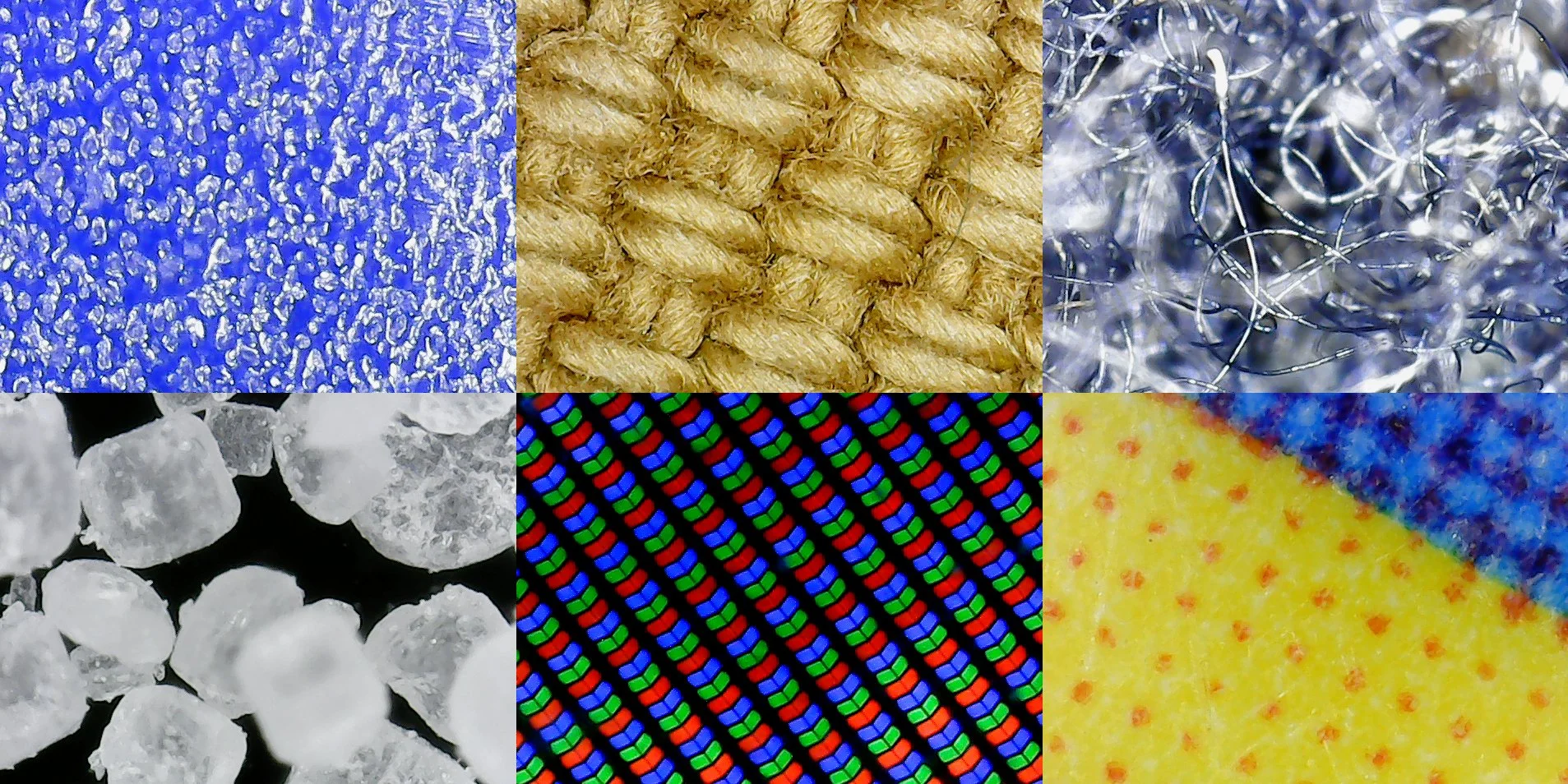
Left to right then left to right again on bottom row: blue plastic, dickies carpenter pants, a flannel shirt Made of synthetic fibres, table salt, my MacBook screen, a Selco trade card.
I chose the table salt to make a neg out of for this test as it’s already quite simple. To make the negative I grayscaled it, inverted it and then altered the curves to reduce the tonal range/increase contrast between light and dark areas. Then printed on to tracing paper/vellum. it’s important to reduce the tonal range as cyanotype process doesn’t have a massive tonal range, so higher contrast images work better, doesn’t mean they can’t have mid tones, just experiment. although there is some newer methods to get a better tonal range developed by the great Mike Ware, learn more here: https://www.mikeware.co.uk/mikeware/New_Cyanotype_Process.html
Anyways, I then contact printed this in a very clunky way with just tape as I couldn’t find my contact printing frame. It didn’t matter too much anyway as I rushed sensitising the paper, which was also already painted (I like to paint mine different colours before sensitising). My exposure unit is just an old school desk I cut a hole into so my UV floodlight fits snug in the lid.
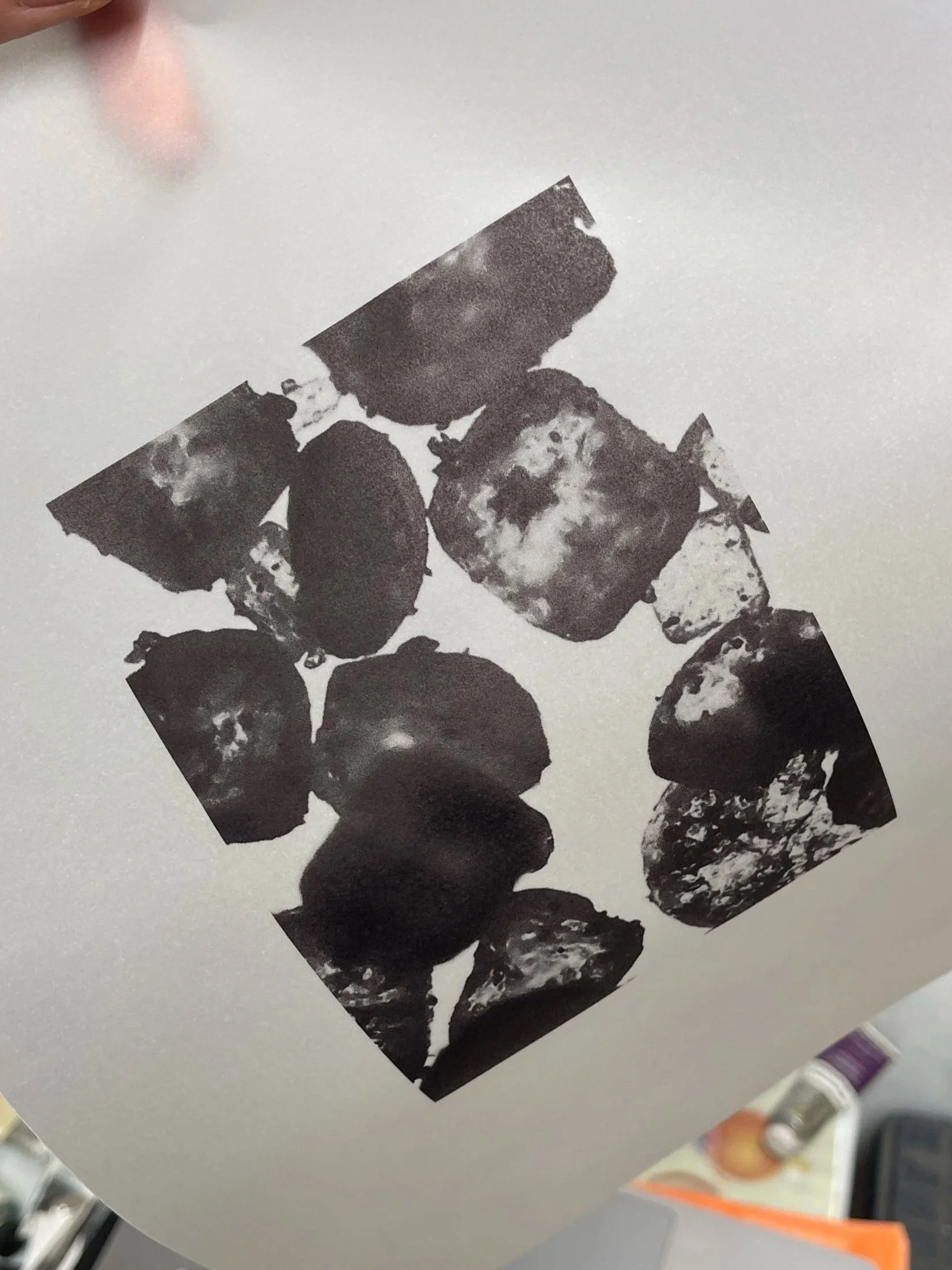
Digital negative of photomicrograph of table salt.
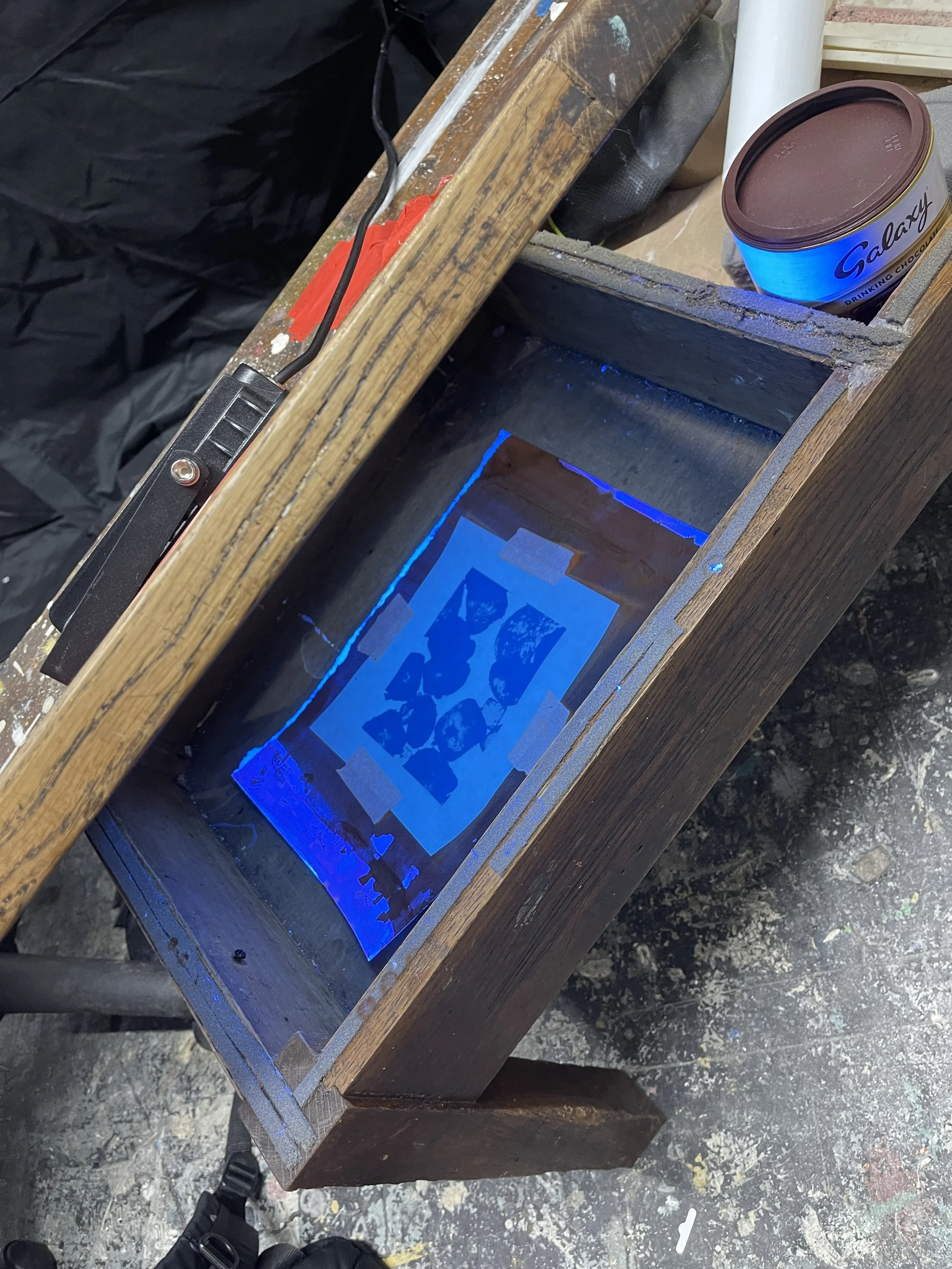
Exposure in progress
After exposing, I rinse the paper and then the image is revealed.
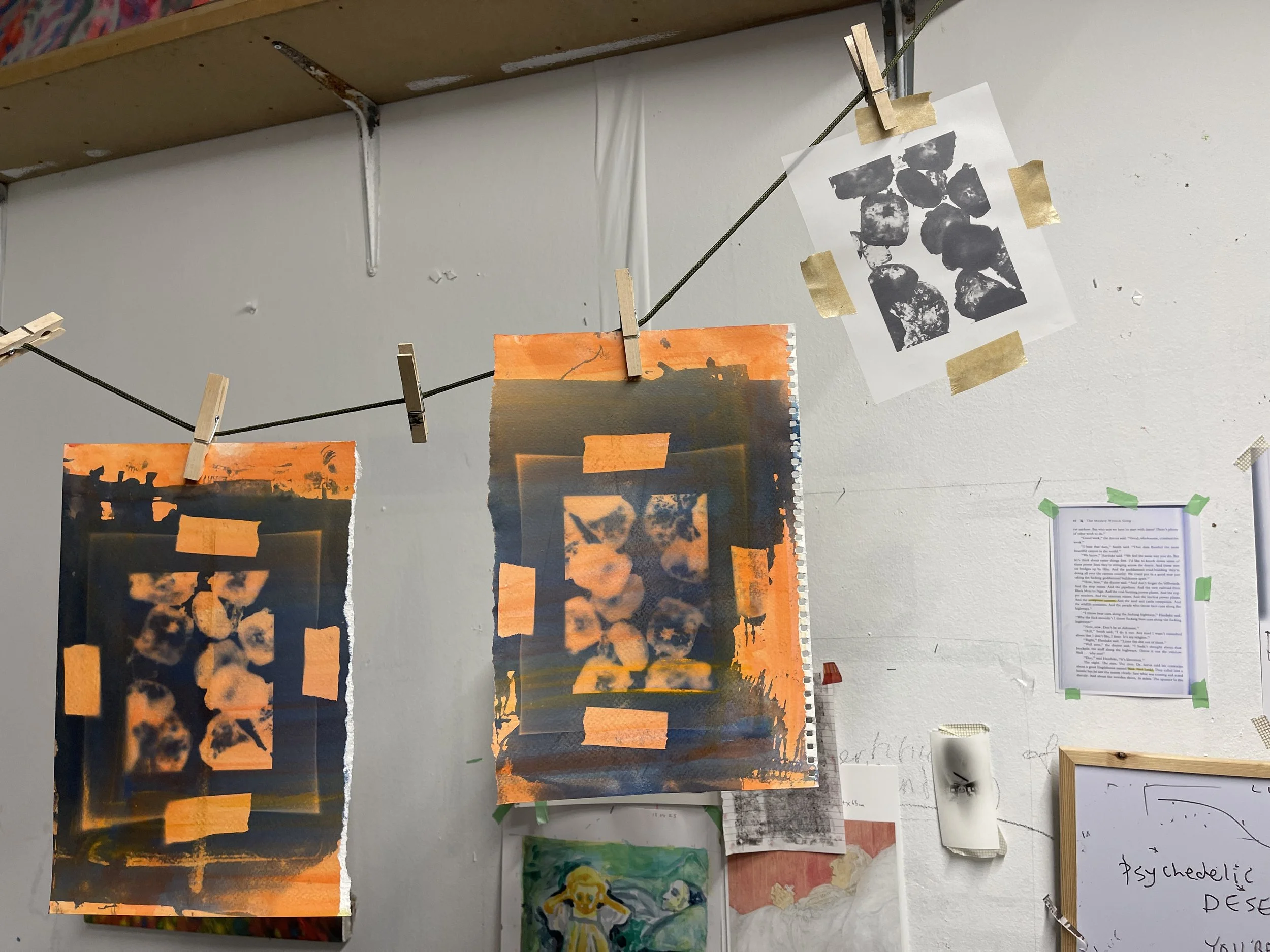
Two photomicrograph contact prints using cyanotype process on pyrrole orange painted watercolour paper.
I mix my own chemistry for cyanotypes, if you’d like to learn how to do this it’s quite simple. 0.8grams of potassium Ferrocyanide per 10 grams of water and 2 grams of Ammonium Iron (III) Citrate per 10 grams of water, if you do very small amounts you can just mix the chemicals together then add water, mix and pass through a coffee filter to get rid of particulates. Then either use a brush or a glass rod to coat your paper and let dry for a bit. Now you have the paper, soo simple. Here is more info: https://jackhalford.com/how-to-make-stuff/how-to-make-your-own-cyanotype-solutions-from-scratch